Why I wish I'd had Nature as a mentor, when I led teams.


I don’t spend much time ruminating on how the past could have been different.
I’ve learned this only keeps us stuck, or wanting - unless we’re doing it to glean new development or wisdom for ourselves and our situation, intentionally learning from what has gone before.
But when it comes to what I’ve learned from Nature as a mentor, gosh, I wish I had known that insight and wisdom in my past leadership roles, managing teams and leading myself through the turbulence of working in a busy charity and health sector over those years.
If you’ve never thought about learning from Nature before, and how this could apply to your team, your life, your friendships or relationships or the complexity of it all in one big ball. Then read ahead to find out more.
This isn’t really about nature-connection and the value it has naturally for our mental health and well-being, though, of course, that’s a wonderful thing in itself for any busy person or leader to embrace.
Imagine this: You can tap into an expert, in all the crucial things of life & work. Living well, resilience, communication, community and teamwork, designing place, culture and environment, evolving, creativity, problem solving, boundaries and the cycle of so much in life.
Imagine that individual had seen the world through 3.8 billion years of learning, and with just a short ‘conversation’ or observation, you’d be able to learn some of that for yourself and apply it to your own situations, team cultures or approaches in life or work.
That’s exactly what I am speaking of when I mention words like Biomimicry, Regenerative approaches and nature-inspired living systems approaches. These are all ways Nature can help to teach us things.
Once we learn to see our world this way, it's hard to unsee it too. And with that, you might find that you begin to care for the wider world in a different way. Because you - and your team or organisation - become part of the interconnected world, not beyond it.
Many of the systems and functions of our working world - and life too- have been designed to innovate & grow by encouraging us to push through, keep going, work harder. But the natural world's version of that rarely leads to the exhaustion, stress, burnout, and conflict that sometimes cultivates itself in our workplaces (and society) when things become too busy or stretched.
There is so much I can say about learning from Nature. But the most crucial aspect that teams say they learn with me in our sessions is the idea that a work culture is like an ecosystem.
It can be designed to be agile, diverse, responding to its own unique circumstances, and that health and well-being make the core of this successful growth.
But even the most glorious and purpose-led workplace admits it feels tricky to create that, when the world around us lives and functions at another pace.
Tricky isn’t impossible its just different, and over the last seven + years of working with teams alongside Nature. Here are some of the lessons I’ve seen workplaces learn from our Natural mentor, that I really wish I’d known as a leader too. The bonus to this learning is it's not just there for work You, but for life You too!
These aren't just metaphors. Some are tangible strategies that every healthy ecosystem needs. So by seeing ourselves as living and diverse beings, nested in wider wilder systems. We can begin to see things a whole lot differently and learn from our Guru Gaia, Mother Earth.
So here is what I’d highlight:
Health and Well-Being is the soil of your workplace culture. Without it your business is depleted. Basic needs are business strategy 101!
Valuing sensing, observation and feedback before shifting into doing, making, and achieving creates greater time management, energy streams and impact in the long run.
Seeing your team/org/family unit as part of an inter-woven ecosystem, allows you to see change in a totally different light and embrace it as normal. (An ecosystem is a collective of living things, interacting with their environment)
Understanding that your self, life, team, org and Nature are in constant seasonal shifts. Being able to understand these phases and energy shifts makes you wiser leaders and team members. Resilient to the Natural course of change. In flow, not resistance.
No Natural ecosystem is constantly ‘in summer’, allow for rest, pause and letting go as a natural part of your productivity cycle in business/life too.
The diversity of your team enriches the ‘soil’ (culture) in the way you problem solve, innovate, collaborate and communicate. It adds complexity to your ‘ecosystem’ and yet it is healthier for it.
Decentralised systems where everyone has the opportunity to lead, in their own way and can be dynamic to change. Creates resilience. A leader isn’t someone who has all the answers; a leader supports collaboration and taps into the strengths in the ecosystem without resistance, allowing for a dynamic way of working.
A bare space will always be filled. What are you and your team filling your bare spaces with, and is that work conducive to a healthy ecosystem? (Doing nothing is doing something)
Viewing energy, knowledge, resources, and learning as fuel or waste helps you consider how recycling & cycling can help save time, money, wisdom and efficiency. From staff handovers & team meetings, to processes, systems and supplies.
Networks of communication are essential to the health of your ecosystem. Whether internally together or in partnership working. Effective communication networks can support resilience.
Pioneering isn’t done in solitude; working with a wider team ensures a brighter future and resilience organisation. Especially when you are going against the grain of systems, or working for a cause that sits between the tensions or needs of society.
If you are struggling with team dynamics, there will be a species in Nature that can help you with solutions. From learning from hives and termites, to tardigrades and sea urchins. You truly can Ask Nature!
Composting enriches the ‘soil. Make letting go, a natural part of a healthy team. Working together to know when and how to do it.
Unique species thrive in mutually collaborative conditions. Are you ensuring your diverse teams and their offerings have a nurturing and psychologically safe environment fit for individual and collective needs?
Creating outcomes that consider future generations, whilst focusing on the now of the moment. Requires a range of energy and resources. Nature prioritises sensing and feedback to affirm its growth habits are for the greater good.
Each project, team, organisation has a life cycle. Support the team to tend to endings in an open and supportive way. Knowing every ending shifts the ecosystem dynamic, and new rhythms have to be learned. (staff member leaving, end of funding, organisational redundancies and buyouts)
Grief, loss and death are part of work as well as life.
Learning from Nature might seem like a weird or new way to lead a team, or explore your life, and yet the 100’s of people I have supported to explore these concepts over the years continue to use natural principles, value Nature as a teacher and look to the natural world to help speed up answers to complex challenges in life. Combined with some human ways of being and doing, this stuff soon becomes a natural way of life?
So how do we do it?
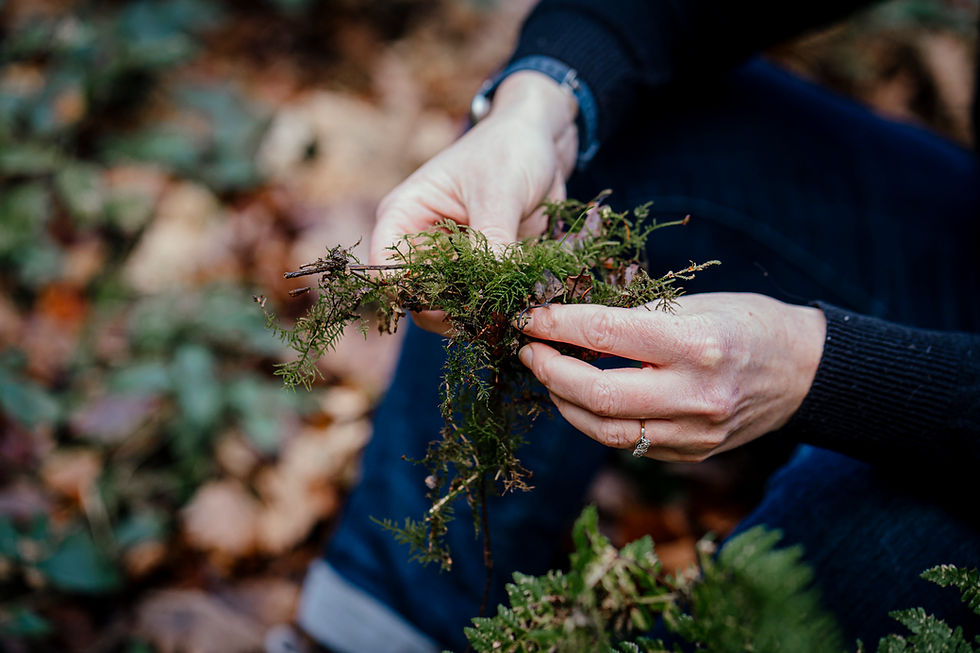
Make space together in Nature
Observe and Learn
I act as a co-facilitator between Nature's wisdom and an exploring team/leaders.
Reflect on learning and insight
Apply strategies, techniques and principles to the working world or culture.
Review the impact and ensure it contributes to sustainable and thriving ecosystems (at work and beyond!)
Want to learn more?
Book a free team consultation here with a decision maker in your team or email info@wherethemindgrows.co.uk for more information

Comments